E-commerce
A catalogue is a content planin disguise.
Every category is a subject. Every season is a run of posts. Every restock, every discontinuation and every product you have to explain before anyone will buy it is something to write about. Most shops are sitting on six months of plan and treating it as a spreadsheet.



The two audiences,
and why they need different channels.
A shop is talking to two groups of people who have almost nothing in common. The first already knows you: they follow the account, they have bought before, and they want to know what is new and what is back in stock. The second has never heard of you and is searching for a problem, not for your name.
The socials serve the first group and are close to useless for the second. The blog is the reverse: it is slow, it is patient, and a piece written in March is still being found in November by somebody who typed a question into a search box. Any plan that treats these as one channel with different formatting will underserve both.
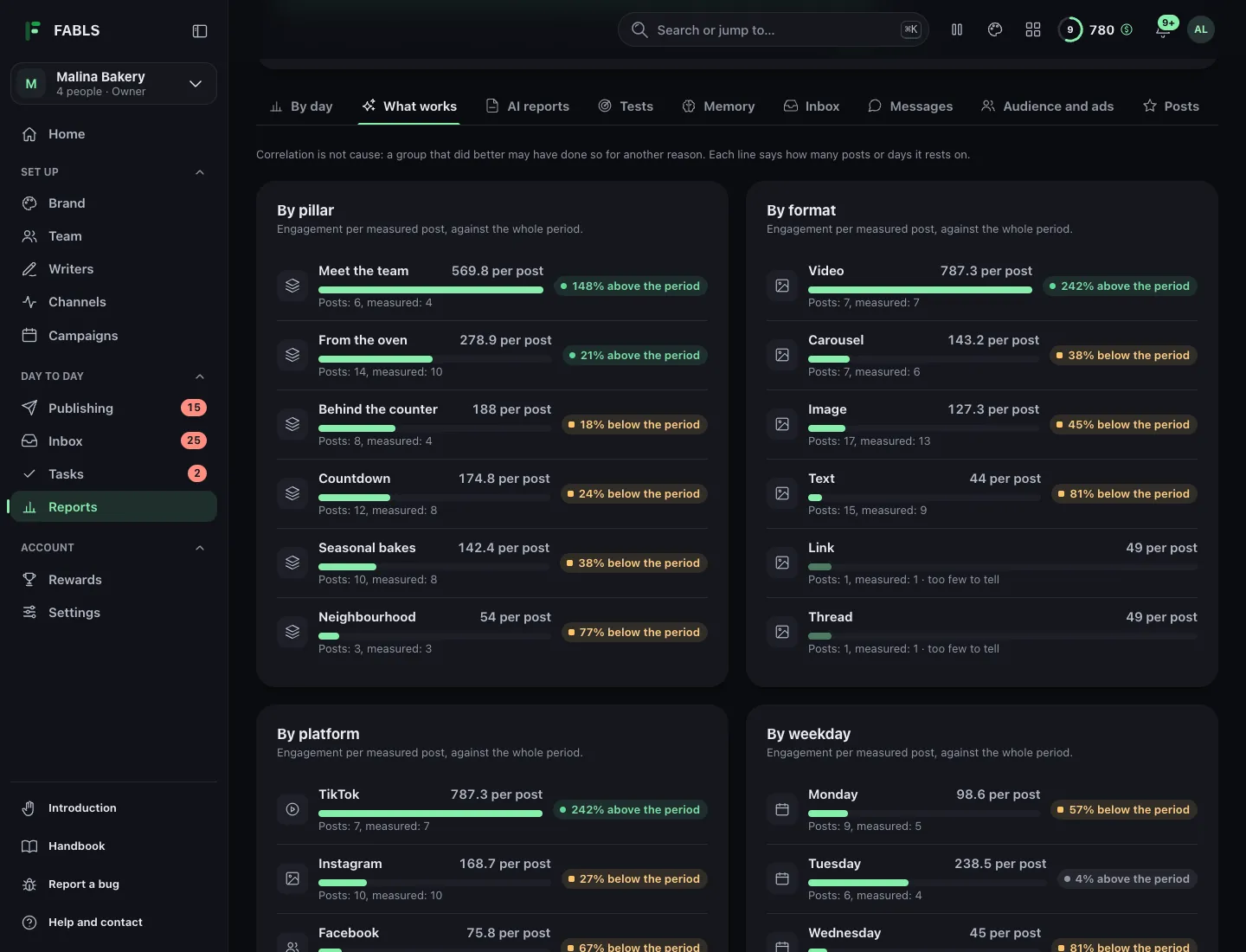
So the share matters here more than anywhere. A shop that gives the blog twenty per cent of its effort and expects it to bring new people is disappointed for reasons that have nothing to do with the writing.
Turning a catalogue
into six months.
Start with the categories that need explaining. In every catalogue there are products people do not buy because they do not understand the difference between two options, or do not know which size they need, or have been told something wrong by a competitor. Each of those is a blog post that will earn its place for years.
Then the seasons, which in a shop are precise: the eight weeks before your peak, the dead fortnight after it, the restock that always lands in the same month. Those go into the plan as seasonality once and shape six months of cadence.
Then the things that recur — new arrivals, the return of a line, the sale, the changeover. Those are cadence rather than themes: they will happen, you know roughly when, and the plan can hold slots for them before you know the specifics.
- 1Blog"How to choose between the two obvious options" — the question the shop answers by e-mail twelve times a week.
- 2InstagramThe new arrivals, one at a time, in a carousel of your own pictures.
- 3BlogThe sizing piece. Written once, referenced from product pages for years.
- ·Held openTwo slots kept empty for whatever actually lands in the restock.
- 4FacebookThe season is coming, said practically: dates, stock, delivery cut-offs.
Themes from the catalogueSeasonality from your year
Product pages do not rank.
Answers do.
Three writers, three jobs
The one who explains,
the one who shows,
the one who announces.
Shops that read well online have separated these. Shops that read badly have one voice trying to do all three, which is why their product descriptions sound like captions and their captions sound like adverts.
The explainer
Writes the blog. Patient, structured, one question per piece, no urgency. This writer's work is what brings people who were not looking for you, and it is the slowest to pay off and the longest to keep paying.
The one who shows
Writes the socials for people who already follow you. Short, visual, specific about what has landed. Every post carries a picture you chose, because a good caption on a bad photograph is still a bad post.
The one who announces
Writes the practical posts: dates, stock, delivery cut-offs, returns. Plain and quick, and read by a person before it goes out. When people comment under those posts, it drafts the replies in FABLS's inbox — and a complaint, or a question about a refund, always waits for you.
Where the pictures come from
Product photography is yours and there is no substitute for it. The same goes for everything around it: the seasonal image at the top of a blog post, the background for a piece about how something is made, the photograph for the article that is not about a product at all.
Pictures are yours, or drawn from an idea. You upload yours in the app, where they are kept public so the platform can fetch them, paste the address of a picture that is already online, or let FABLS draw one in your brand's colours. A WordPress article takes one as its featured picture; an Instagram post takes one, or a carousel of two to ten.
Ads are a separate door.
This is the slow channel.
Paid reach is a separate door. Google Ads builds search campaigns on your own account, Meta ads can be composed from a campaign, and a post that is live can be boosted; you pay Google or Meta, and nothing starts until a person approves it. Everything else FABLS does is organic: posts on your own channels, drafted by your writers. How ads and boosts work in FABLS.
The honest bit: content is a slow channel for a shop. The socials will show something within weeks; the blog takes months and then keeps working for years. If you need revenue this quarter, this is not the lever — it is the one you pull now so that next year is easier.
How a plan is compiled